Galeries Ontario / Ontario Galleries’ Law & Order workshop on January 20th sparked conversations about preparedness, responsibility and ownership
Many galleries do not have significant resources when it comes to security and access to expertise. It is important for these institutions to have a deep understanding of legality, safety and responsibility relating to art works in order to continually reassess their collections. As a leader in education and professional development for institutions and their staff, Galeries Ontario / Ontario Galleries created Law & Order: Art Law, Copyright and Crime Prevention in Collections to fill the gap in many institutions’ knowledge on Canadian art laws and art crime. Law & Order provided galleries with valuable access to experts and sparked meaningful conversations around legality and ownership. The workshop left galleries with new methods, practices and models of handling collections to adapt within their institutions that consider cultural property law, copyright, theft, and repatriation.
GOG invited Paul E. Bain, Lawyer at Dickinson Wright LLP, and Erin Gurski, Copyright Specialist, to give participants a crash course in cultural property law and copyright law in Canada. The presenters explained the most critical aspects of these laws that apply to collections, and deciphered why certain laws and definitions have been of debate in Canadian governing bodies. The rights protecting works of art can get tricky, but it’s important to understand them when it comes to claiming, reproducing or exhibiting copyrighted works.
Throughout the Q&A period it became clear why it is important to have these conversations and for institutions to be proactive in learning or reviewing the legal aspects of collections. Laws are often changing, and there are many gray areas that require research and clarification for those not well-versed in Canadian legal code. With the help of the experts, participants were able to learn valuable new skills such as negotiating copyright, or completing audits to ensure all works in a collection are rightfully owned and documented – often overlooked practices that should be essential for institutions of any size.
Participants also heard from J. Mark Collins, one of the only Canadian experts in the field of art crime, whose unique presentation reiterated the necessity of proactiveness and preparedness within institutions. Participants in this session learned preventative tactics to adopt in their own galleries to avoid theft and how to react when it happens, such as maintaining proper cataloguing, providing response training for staff members, being an advocate in an investigation with the police, and participating in exercises to determine potential risks (like “red teaming”). Attendees discovered that knowing how to respond to legal situations can be just as important as preventing them, and requires just as much vigilance.
The topics introduced in the first half of the workshop provided the framework for deeper conversations about ownership that arose in our final session. While Paul Bain and Erin Gurski discussed owning the rights to works of art from a legal perspective, the second half of the workshop unveiled that the discussion of ownership is one that goes deeper than legality, and requires a great deal of learning as well as un-learning.
In three case studies presented by Sara Angel, Christine Braun and Nika Collison, session four of our workshop, titled ‘Art and Ownership,’ delved into the legal and moral aspects of repatriation as they exist in the Canadian context today. Each speaker presented an interesting story relating to the topic of repatriation – from returning Nazi-looted art at large and small institutions to the Indigenous repatriation initiatives happening on Canada’s west coast. Participants witnessed how the processes of repatriation can differ from case to case, yet all speakers outlined how proper research and communication play a large part in meaningful acts of repatriation. Institutions of any size, significance or means can be home to illegally acquired art works, but intent and care can make the difference between returning works in a thoughtful or irresponsible way.
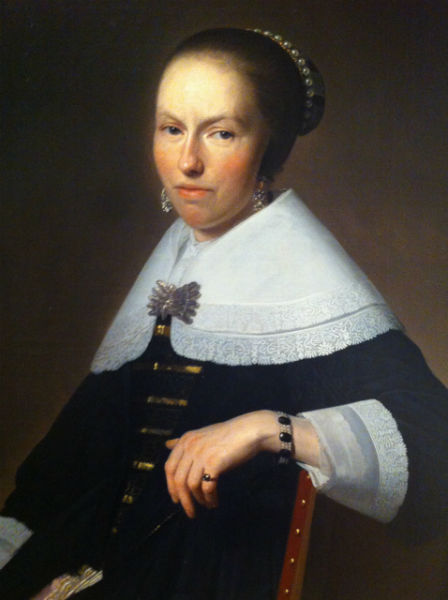
Christine Braun, Collections Manager and Researcher at the Art Gallery of Hamilton (AGH), shared her institution’s learning experience with repatriation when they underwent the process of returning Verspronk’s Portrait of a Lady in 2003. A gallery without extensive resources or expertise, the AGH participated in an act of repatriation over the course of 10 years when they discovered one of their prized works of art was looted by Nazis in the Second World War.
Comparing the processes of (and enthusiasm for) returning Nazi-looted art with that of Indigenous works did raise questions about the ongoing colonial values in Canada that play in to repatriation. To close our workshop, Nika Collison, Executive Director and Curator at the Haida Gwaii Museum and member of the Kaay’ahl Laanas clan of the Haida Nation, generated a powerful discussion about the repatriation of Indigenous objects in Canada. Her presentation questioned why so much is still lacking in terms of resources, awareness and education for these procedures, and why Indigenous communities are still doing this work for institutions to return their objects when other art works have laws and alert systems dedicated to their return. Nika shared the basis of Indigenous law which pointedly frames the conversation around repatriation: Tell the truth, make things right. Participants left the workshop with the reminder that ownership is not only a legal issue, but a human one, and that museums and galleries have the power to become institutions of change instead of genocide.
GOG’s workshop provided attendees the opportunity to hear first-hand from a multitude of diverse and rich perspectives on contemporary topics in Canadian art law. Though all unique, each speaker underlined that proactivity, education, communication, and thorough research are all keys in maintaining a collection that aligns with its legal and ethical obligations. Galleries have a responsibility to uphold these obligations today, but also to be looking towards the future to be prepared, reassess collections, and act as a model for how institutions approach ownership.
On January 20, 2022, GOG hosted the workshop Law & Order: Art Law, Copyright and Crime Prevention in Collections. Thank you to all of our wonderful presenters and to the funding contribution from the Museums Assistance Program with the Department of Canadian Heritage.
If you missed out on this workshop, don’t worry! Registration is open for our next online professional development workshop coming up on March 16 & 17, 2022: Art, Collections and the Environment.
Art, Collections, and the Environment is a two-day professional development workshop series about art galleries and museums’ impact on the current environmental crisis. This workshop will separate two of the critical areas that art galleries can focus on in helping with the environment crisis. Day one will focus on the physical spaces that house galleries’ collections and reduce their environmental impact. Day Two will examine how art galleries can collect and programme with artists and artworks focusing on promoting environmental issues.
Subscribe to our newsletter to receive these stories in your inbox, and to be the first to know when registration has opened for our upcoming programmes: